Why Point Breeze Avenue Can't Fill Its Storefronts
The neighborhood is booming. The commercial corridor isn't. The explanation lives in a zoning code.

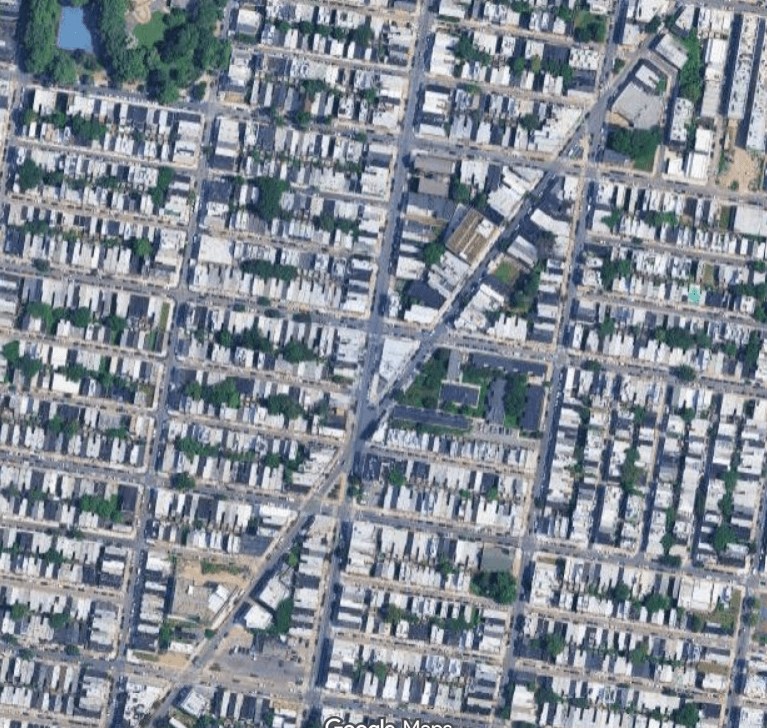
Walk Point Breeze Avenue on a weekday afternoon and the tension is impossible to miss. On the residential side streets, construction crews are framing new rowhouses. Cranes punctuate the skyline above Washington Avenue to the north. For-sale signs on freshly renovated rowhouses list prices that would have seemed absurd a decade ago. By almost any residential metric, Point Breeze is one of the fastest-changing neighborhoods in Philadelphia.
Then you look at the Avenue itself.
Vacant storefronts occupy stretches of the corridor between Federal and Dickinson Streets. South of Dickinson, the picture worsens considerably, with vacant lots, shuttered buildings, and blocks that transition almost entirely back into residential use before the avenue terminates. The gap between what is happening in the surrounding neighborhood and what is not happening on its main commercial spine is striking, and it is not an accident.
A Corridor in Historical Context
Point Breeze Avenue was, for much of the twentieth century, a genuine neighborhood commercial hub. Longtime residents describe an avenue dense enough with retail that families rarely needed to travel to Center City for everyday goods, with hardware stores, clothing shops, grocers, pharmacies, and small restaurants forming an ecosystem sustained by the dense working-class population surrounding them.
That ecosystem collapsed over several decades of disinvestment, population loss, and the structural economic shifts that hollowed out manufacturing-dependent neighborhoods across Philadelphia. Point Breeze Avenue's decline began long before e-commerce was a factor, and the corridor has never come close to recovering, even as residential development has dramatically accelerated in the surrounding neighborhood.
The neighborhood's residential transformation has been among the most dramatic in the city. From 2000 to 2016, median housing prices in the most gentrified areas of Point Breeze rose from $29,000 to $234,000, while the neighborhood shifted from 80 percent Black to 46 percent Black. Point Breeze and Grays Ferry witnessed rapid gentrification driven by their proximity to the heated real estate activity of Graduate Hospital and changes in the zoning code. New residents, largely higher-income and largely white, have arrived in significant numbers, bringing with them both disposable income and demand for the kinds of amenities that support a commercial corridor.
And yet the corridor has not responded as economic logic might suggest it should.
The Zoning Trap
The most direct explanation for Point Breeze Avenue's persistent vacancy is structural, and it begins with the zoning code.
Point Breeze Avenue is zoned CMX-2, which is nearly impossible to redevelop without a variance from the Zoning Board of Adjustment. The practical implications of this classification are severe. With much of the corridor zoned CMX-2, height, density, and open-air requirements essentially allow for ground-floor retail and two upstairs apartments on a regularly sized parcel. Because retail rents remain very low on the corridor, the performance of any mixed-use development on Point Breeze Avenue relies almost entirely on residential rents.
This creates a financing problem with no clean solution. Developers who want to build on the avenue face a math equation that does not work. The retail rents the market will support do not cover construction costs, and CMX-2 limits the residential units above enough that those rents cannot compensate. The only way to make mixed-use development viable on a corridor like Point Breeze is to rezone to a more generous classification, like CMX-2.5, which would allow more height and density and create additional apartment units to cover the shortfall.
The comparison to other corridors in the city is instructive. Ridge Avenue in Francisville is zoned CMX-2.5, which allows greater height and density by right, and the result has been considerable new construction with retail spaces waiting for tenants. In Point Breeze, by contrast, very limited new projects have appeared on the corridor itself.
The rational response for most developers is to avoid the problem entirely. Parcels along the avenue that could accommodate ground-floor retail are frequently zoned RM-1, which allows multi-family projects by right but forbids retail use without a zoning variance. Given the near-impossible path to getting a zoning variance in this neighborhood, developers take the path of least resistance, building residential only, adding density to the surrounding blocks without contributing anything to the commercial corridor those residents might patronize.
The perverse outcome is a 57-unit apartment building on one of the avenue's more prominent blocks with no ground-floor retail, because the zoning prohibited it. There is not a developer in the city who would willingly take a project in front of the ZBA in Point Breeze unless absolutely necessary.
Politics and the Rezoning That Hasn't Come
The fix has been identified for years. Urban planners, real estate observers, and the Philadelphia Planning Commission have consistently called for remapping Point Breeze Avenue to CMX-2.5. The Planning Commission urged Councilman Kenyatta Johnson to address development concerns in the rapidly gentrifying neighborhood, and a 2018 bill introduced by Johnson's office proposed changing the corridor's zoning from CMX-2 to CMX-2.5, which would allow buildings up to 45 feet and greater residential density.
The bill exposed the political difficulty of zoning reform in a neighborhood undergoing rapid demographic change. Long-established residents, already anxious about displacement, viewed increased density and height as acceleration of the forces pushing them out. Community groups that might have been natural allies of commercial revitalization pushed back against the scale of development the rezoning would allow. One neighborhood leader argued that 45 feet on Point Breeze Avenue would tower over existing houses.
This opposition reflects a real tension that is not easily dismissed. The same development economics that would revitalize the commercial corridor also produce the market-rate housing and rising land values that make the neighborhood less affordable for the people who stayed through the decades of disinvestment. The zoning reform that could bring a grocery store or a pharmacy to the avenue is the same instrument that brings the five-story apartment building that local residents protest. Asking a community that has already absorbed an enormous amount of change to accept more in the name of commercial amenity is a difficult political ask, and it has repeatedly stalled.
The result is a kind of institutional paralysis. The corridor stays zoned for a development pattern that no longer works economically, new residential density accumulates in the surrounding blocks without feeding back into the corridor, and the vacancies persist.
What the Market Alone Cannot Solve
Some incremental commercial activity has emerged. A handful of businesses, including coffee shops, a yoga studio, and a pizza restaurant, have opened along the northern end of the corridor in recent years, signs of the new residential population seeking services close to home. Efforts like a temporary pop-up market, run by a developer behind South Philadelphia Tap Room, were designed explicitly to test whether merchants could generate sufficient interest in a neighborhood that, at the time, was less densely populated than an ideal commercial site.
What Point Breeze Avenue illustrates, ultimately, is that gentrification and commercial revitalization are not the same process, and one does not automatically produce the other. A neighborhood can transform completely on its residential blocks while its commercial spine stays frozen in a zoning designation written for a different economic era. Fixing it requires a political consensus that has not yet materialized, one that asks a community already living through rapid change to accept more of it, in exchange for storefronts that might not return even if the zoning does. Until that consensus exists, the avenue will keep doing what it has done for years: filling up with new neighbors on every side, while the storefronts in front of them stay empty.