The Slow Leak: How an Unaddressed Demographic Crunch Could Drag Down Greater Philadelphia
From Bucks County kindergartens to Temple's budget office: one demographic problem, one region, one closing window to respond

A warning written in kindergarten rosters
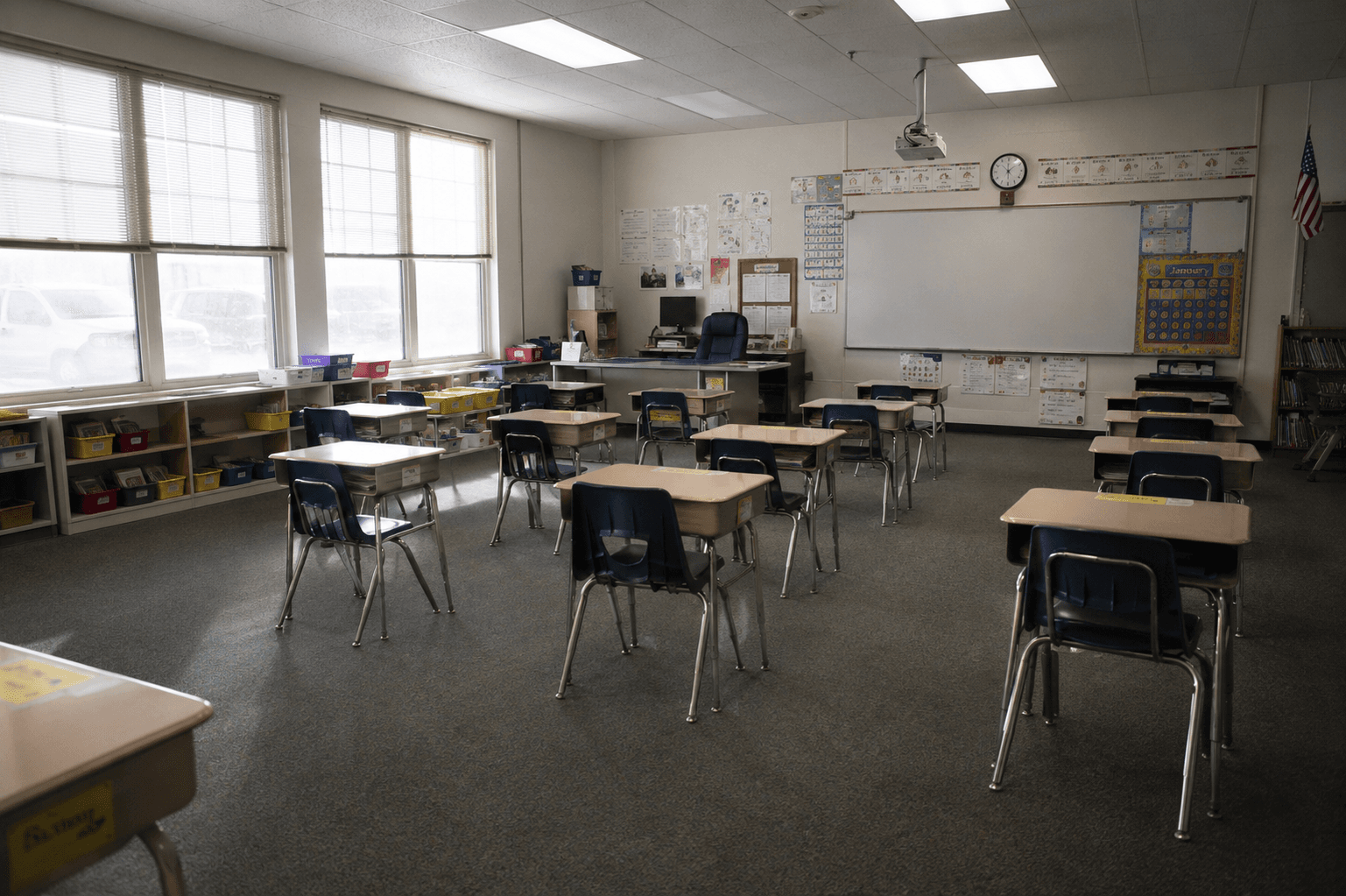
In his February 2026 budget address, Governor Josh Shapiro said something that should have made every school board, university trustee, and township supervisor in the region sit up. Pennsylvania's kindergarten classes are now 26% smaller than its high school graduating classes. That single sentence contains the entire argument of this piece. The pipeline that has fed this region's schools, colleges, workforce, and tax base for three generations is narrowing at the intake end, and the narrowing is not a temporary dip. It is the leading edge of a twenty-year demographic arithmetic problem, and it is already visible, school district by school district and college by college, across a 60-mile radius from Center City.
This is not, by itself, a crisis. A single shrinking district can adjust. A single struggling university can merge, cut costs, or find a niche. What makes this a regional threat is what happens when dozens of institutions face the same contraction simultaneously, while some of the region's most important economic engines (its research universities, teaching hospitals, and the tax base that supports its townships) are all built on the assumption of a steadily growing, or at least stable, population of young people. If nothing changes, the mechanism now visible in Bucks County kindergartens will keep climbing the ladder into high school graduating classes, into college admissions offices, into the workforce pipelines that feed Philadelphia's hospitals and its remaining employers, and finally into the property tax base of every township that built its schools, roads, and services around growth that has already stopped.
Ground zero, and its edges
Start with the numbers that are least ambiguous. Pennsylvania has 39,000 fewer K-12 public school students than it did in 2019-20, and the state's own Department of Education projects a further decline of 21,000 to 60,000 students by 2030 (estimates vary by which report and baseline year you use, but every version points the same direction). Statewide, enrollment has fallen from 1.8 million in 2000 to 1.5 million today, even as the number of school employees has grown 10%, a mismatch that is quietly eating into every district's budget math regardless of whether that district is shrinking fast or slow.
Bucks County shows this most starkly among the outer, newer-growth suburbs. Central Bucks, the county's largest district, has lost roughly 3,200 students, or 16%, since 2009-10. Pennsbury lost 319 students, a 3.32% drop, in a single year (2024-25 to 2025-26) and has shed nearly 800 students since its 2019-20 peak. Council Rock has lost about 656 students since 2015. These are the districts that grew fastest during the exurban boom of the 1990s and 2000s. They are now the ones with the furthest to fall.
Philadelphia proper tells a related but distinct story. The School District's enrollment peaked in 2019-20 and has since dropped by more than 17,000 students, a decline the district's board answered in April 2026 by voting to close 17 schools. A brief, celebrated uptick in 2024-25 reversed almost immediately: enrollment fell again by more than 1,050 students in fall 2025. The state's own projection model expects Philadelphia to lose roughly 10,000 more students by 2034-35, with officials explicitly stating the city will not recover the ground it has already lost. What has partially cushioned Philadelphia's numbers, a doubling of English Learner enrollment largely from immigrant families, is now itself showing signs of reversing under intensified federal immigration enforcement, a dynamic documented in nearby Delaware, where 11 of 16 traditional districts saw multilingual-learner enrollment drop in 2025-26 amid reports of families self-deporting.
Delaware County complicates any simple story of uniform decline, and the district-by-district picture makes that plain. Upper Darby (12,494 students) is the county's largest by a wide margin. William Penn (roughly 5,000) is one of the state's most persistently underfunded districts, the lead plaintiff in a school-funding lawsuit that won a landmark 2023 state supreme court ruling that still hasn't resolved its finances. Chester-Upland, at roughly 3,143 students, has cycled through state financial oversight for years, carrying problems that predate and are largely separate from the demographic cliff. In between sit a cluster of comfortable, mid-sized suburban districts, including Ridley (about 5,628), Rose Tree Media (4,188), Marple Newtown (3,925), Wallingford-Swarthmore (3,707), Radnor (3,616), Springfield (about 4,407), and Penn-Delco (3,238), none showing dramatic movement in either direction on the most recent single-year snapshot available. The one genuine surprise is Haverford Township, a district whose own 2021 demographic study explicitly projected continued growth and was built to plan for expanded capacity needs, and has instead posted three consecutive years of modest decline (6,634 to 6,610 to roughly 6,530 today). Delco is not one story. It is fifteen overlapping ones, ranging from genuine crisis to mild, unexpected softening in places that assumed they were exempt.
Lower Montgomery County offers the sharpest, most instructive contrast in the entire region, largely because it has the longest documented history of any area studied here. Lower Merion gained 1,848 students between 2008 and 2018-19 and kept growing until it peaked above 8,700 students in 2021, the highest level since the early 1970s, forcing the district to build an entirely new middle school and reconfigure grade levels district-wide to relieve overcrowding. Abington grew from 7,816 students (2015-16) to 8,608 today, outpacing even its own optimistic growth projections, driven partly by families transferring in directly from Philadelphia and from its next-door neighbor, Cheltenham (192 such transfers in the 2019-20 school year alone). Cheltenham, meanwhile, grew steadily from 2009 to 2016 and has lost more than 340 students since, driven by a documented shift toward private schools, aging school facilities, and an 18% drop in its multifamily-housing student population. Two adjacent, demographically similar districts are moving in opposite directions, with one directly absorbing the other's losses. Even Lower Merion, the strongest growth story in the entire region, has now edged down slightly from its 2021 peak. If the cliff can eventually catch the wealthiest, most in-demand district in Greater Philadelphia, no amount of local prestige is a permanent hedge against the underlying birth-rate math.
Norristown, a few miles from both, offers a third pattern entirely: not strategic growth, and not birth-rate decline, but a demographic cushion that may not last. Its enrollment has held essentially flat for years, a consistent 7,600 to 7,700 students across every recent count, even though the county surrounding it is subject to the same falling birth rate as everywhere else. What's holding the number steady is immigration. Norristown's English Learner population grew more than 30% between 2020-21 and 2022-23, among the sharpest such increases of any Pennsylvania district, and its student body is now roughly half Hispanic or Latino. That is the same mechanism cushioning Philadelphia's district-wide numbers, playing out at neighborhood scale a few miles up the Schuylkill. It may be showing early signs of the same fragility, too: in November 2025, Norristown residents packed a municipal council meeting, describing fear over intensified federal immigration enforcement and asking local officials for reassurance that police weren't coordinating with ICE.
A caveat worth stating plainly: at this point that is a documented community reaction, not a documented enrollment effect. The clearest evidence of an actual multilingual-learner enrollment decline tied to self-deportation comes from Delaware, not Pennsylvania. Norristown's own enrollment figures have not yet shown a comparable drop. The connection drawn here is a reasonable hypothesis given what happened one state over, not a confirmed local trend, and it should be treated that way until Pennsylvania-specific enrollment data says otherwise.
New Castle County, Delaware shows the identical fractal pattern one state over. Christina, Colonial, Brandywine, and Red Clay are all in documented decline (Red Clay now contains the two smallest public high schools in the entire state), while Appoquinimink, riding a wave of new housing development around Middletown, is growing rapidly. South Jersey's version of the same story is less about raw enrollment and more about fragmentation: 137 New Jersey districts statewide have fewer than 500 students, 51 of them in South Jersey, prompting active legislative proposals to force consolidation. Cherry Hill (10,772 students) is absorbing back-to-back years of state aid cuts even as neighboring Evesham, Medford, Moorestown, and Mount Laurel post aid increases in the same budget cycle, the same local divergence expressed through a funding formula instead of a bus schedule.
What connects all of it
Strip away the local particulars and one mechanism recurs everywhere: this is a birth-rate story first, and a migration or policy story second. The U.S. birth rate fell sharply after the 2008 financial crisis and never recovered. Run that forward and you get exactly what shows up in this data: the population of 18-year-olds nationally peaked in 2025 and is now beginning a projected multi-decade decline. Pennsylvania is flagged by multiple analysts, alongside Ohio and Michigan, as an above-average casualty of this shift, with some projections showing 20 to 30% fewer Pennsylvania high school graduates by 2030.
But the birth-rate mechanism alone doesn't explain why Cheltenham is losing students to Abington, or why Appoquinimink is growing while Christina shrinks a few miles away, or why Rowan just welcomed its largest class ever while Stockton's president is warning the university could exhaust its reserves within five years. Those divergences are being driven by housing development patterns, immigration policy, school choice competition, and, increasingly, deliberate institutional strategy. The birth-rate decline sets the ceiling on how many students exist in total. Everything else determines who gets them, and it also determines who gets to appear exempt from the ceiling longer than they actually are. Norristown and Philadelphia's district-wide numbers look stable largely because immigrant enrollment has been offsetting the same underlying birth-rate contraction hitting Cheltenham or Central Bucks outright, which means their apparent stability may rest partly on a policy variable rather than a purely demographic one. That connection is plausible given what's already happened in Delaware, but as noted above, it remains a hypothesis for Pennsylvania specifically until the district-level numbers confirm it.
Where the pipeline empties: higher education
The reason this matters beyond any single school board's budget is that the K-12 numbers are not a warning about some future problem. They are the same problem, arriving on a delay. The students entering college this fall were born during the trough of the post-2008 birth decline. The Western Interstate Commission for Higher Education projects the national pool of high school graduates, having peaked in 2025, will fall 13% by 2041. Pennsylvania's above-average exposure to K-12 decline means its colleges are exposed early and hard.
Temple University, the city's largest public institution, is the starkest proof this isn't theoretical. Enrollment has fallen from 40,240 (2017) to 29,503 (2025), a 27% drop, costing over $200 million a year in lost revenue and triggering a cascading series of budget deficits, layoffs, and a total abandonment of the university's decade-old internal budget model. Pulling Temple's own institutional fact books shows the erosion is disproportionately a Pennsylvania problem specifically: full-time PA-resident undergraduate enrollment fell 30.7% between 2019 and 2024, steeper than the university's overall decline, meaning Temple's crisis is substantially the same shrinking pool of Pennsylvania families whose kindergarten classes are emptying out in Bucks County right now. Drexel has lost roughly 20% of its enrollment over a decade-plus. La Salle's freshman-to-sophomore retention fell from 73% to 66% in a single year. The University of the Arts closed with one week's notice in 2024 despite modeling a stronger incoming class than the year before, and filed for bankruptcy weeks later.
At the top of the pyramid, Penn and Villanova are, if anything, benefiting. Penn drew more than 61,000 applications for a single class even after reinstating mandatory testing. Villanova is deliberately expanding its class size on the back of record application numbers, and has absorbed the campuses of two failing neighbors, Cabrini and, eventually, Rosemont. In South Jersey, Rowan posted its largest class in history and opened New Jersey's first veterinary school, though that program's very existence required an eleventh-hour state budget rescue after the governor's initial 2026 proposal zeroed out its funding entirely, a reminder that even the region's clearest growth story runs on fragile, non-tuition support rather than durable market demand on its own.
The pattern across every tier is the same one first named by a University of Pennsylvania professor describing the collapse of UArts: the rich get richer, the big get bigger, and the small and vulnerable close, merge, or shrink. That sorting is not random. It maps almost exactly onto the same geography as the K-12 data, concentrated in Philadelphia proper and the older, inner suburbs, while the newest-growth exurbs and a handful of prestige-brand institutions are comparatively insulated, for now.
The case for urgency
None of this is inevitable in its consequences, even if the underlying birth-rate math is fixed for the next two decades. The number of 18-year-olds in 2035 is already determined. What is not yet determined is how the region's schools, colleges, townships, and economic development strategy respond to that fact between now and then.
Left unaddressed, the mechanism compounds in a specific, predictable order. School districts built around growth assumptions (new buildings, expanded staff, debt service on construction bonds) face a widening gap between fixed costs and a shrinking tax base of school-age families, forcing either steep local tax increases or building closures, both of which make the affected townships less attractive to the next generation of young families, reinforcing the decline. Universities dependent on a shrinking regional applicant pool either consolidate, as Temple and Drexel are already doing, or close outright, as UArts, Cabrini, and soon Rosemont have, each closure removing a local employer, a real estate anchor, and a source of civic and cultural activity from its host neighborhood. Because Philadelphia's regional economy leans unusually heavily on its "Eds and Meds" institutions as stabilizing employers and growth engines, a wave of university contraction doesn't stay contained to campus payrolls. It works its way into commercial real estate vacancy, into the health systems that many of these universities are financially entangled with, and into the broader signal the region sends to the businesses and workers it's trying to attract or retain.
The one hopeful thread running through all of this data is that the sorting is not simply geographic. It is strategic. Lower Merion, Abington, and Rowan did not escape the demographic cliff by luck. They escaped it, or delayed it, through housing policy, differentiated academic programs, and deliberate positioning relative to their neighbors. Cheltenham, Stockton, and Temple are not failing because of some inherent flaw, but because the response to a shrinking pool of students has, so far, been reactive rather than strategic, cutting costs after the fact rather than repositioning ahead of it. The region's institutions that treated the enrollment cliff as a five-year problem to manage, rather than a permanent condition to plan around, are the ones now closing buildings and laying off staff on the fly.
There is a third category, though, that deserves its own warning, because it may be the most exposed of all: places like Norristown and Philadelphia proper, whose enrollment numbers look stable today partly because immigrant families have been filling the gap left by falling native birth rates. That stability was never a strategy. It was a byproduct of federal immigration levels the districts themselves have no control over. If enforcement-driven self-deportation spreads the way it already has in Delaware, these districts could face the full force of the underlying demographic cliff all at once, with none of the years of advance warning that Central Bucks or Pennsbury have had to plan school closures and staffing reductions. To be clear, that is a risk this research suggests rather than a trend it has confirmed in Pennsylvania specifically. But it is exactly the kind of risk that argues for planning ahead of the data rather than waiting for it, since a policy shift in Washington, not a change in the local birth rate, would be the trigger, and would leave far less runway to respond than the slower-moving birth-rate decline has given everyone else.
The kindergartners entering Bucks County classrooms this fall will graduate high school in 2038 and, if regional patterns hold, many will look for a nearby college and eventually a nearby job. Whether that region still has the schools, colleges, and economic base to receive them, or whether the slow leak visible today in Pennsbury's enrollment figures has by then hollowed out entire institutions and the townships built around them, depends less on the birth rate, which is already locked in, and more on whether Greater Philadelphia's schools, universities, and local governments start treating this as one connected problem now, while there is still room to adapt, rather than as a series of unrelated local crises to be managed one closure at a time.