The Five Moments That Made Philadelphia, America's Birthplace
A quarter millennium later, these moments still help define the American Dream.

Two hundred fifty years ago this week, a Philadelphia printer's shop turned out copies of a document that would outlast every empire that doubted it. This city has spent two and a half centuries collecting moments like that. Not just old, but load bearing. Moments other places talk about, that actually happened here.
On the anniversary of the biggest one, here are five more that built the country from the ground up, all of them within walking distance of Independence Hall.
1. The Declaration of Independence, 1776
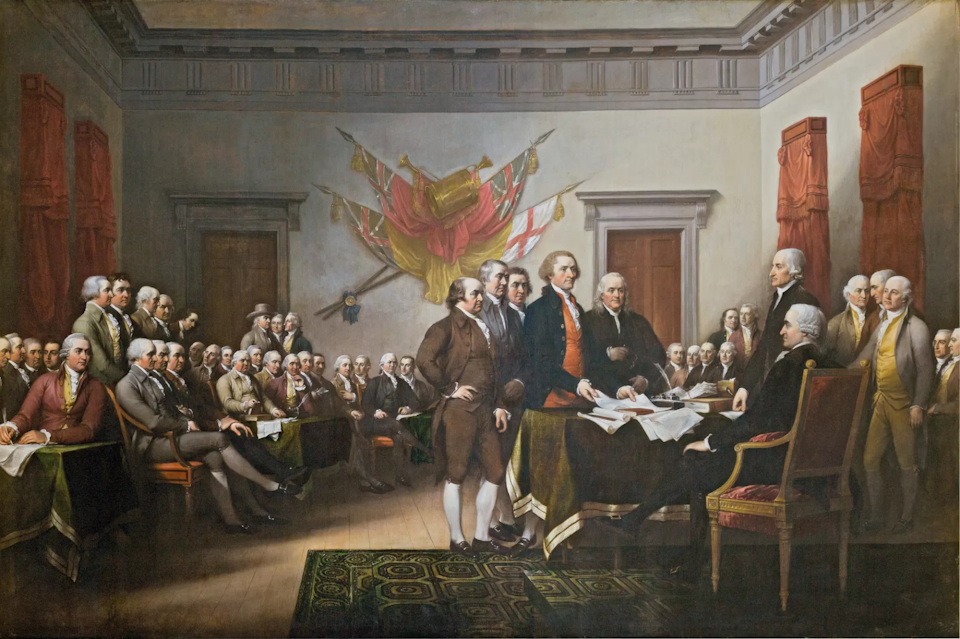
Independence didn't arrive in one clean motion. Congress actually voted for it on July 2, when delegates approved Richard Henry Lee's resolution declaring the colonies "free and independent States." John Adams was so certain that date would be the one Americans celebrated forever that he wrote his wife predicting fireworks and parades for generations to come. He was two days early, but he had the right instinct.
What happened on July 4 was the adoption of Jefferson's actual text, the document Adams had pushed Congress to let Jefferson draft in the first place. Congress spent July 2, 3, and 4 revising his draft, adopted it, and sent it to the printer. John Dunlap had broadsides running off the press by the next morning.
Here's the detail that tends to surprise people: nobody signed anything that day. Congress didn't even order an official copy prepared for signatures until July 19, once New York's delegation finally got authorization to make the vote unanimous. Most of the 56 signatures we associate with July 4 were actually added on August 2, a full month later, with John Hancock going first in that famously oversized hand. A few names weren't added until months after that, as new delegates arrived and took their turn making the same irreversible commitment.
None of that makes the document less remarkable. It makes the men who put their names on it more so. By August, word of the Declaration had spread through every colony. Signing it wasn't a formality by then. It was 56 men individually choosing to commit an act the Crown considered treason, punishable by death, with full knowledge of what they were putting their names to. That's a braver signature than the one-day version of the story ever gave them credit for.
2. The Constitutional Convention, 1787
If the Declaration was Philadelphia's loudest moment, the summer of 1787 was its most patient one.
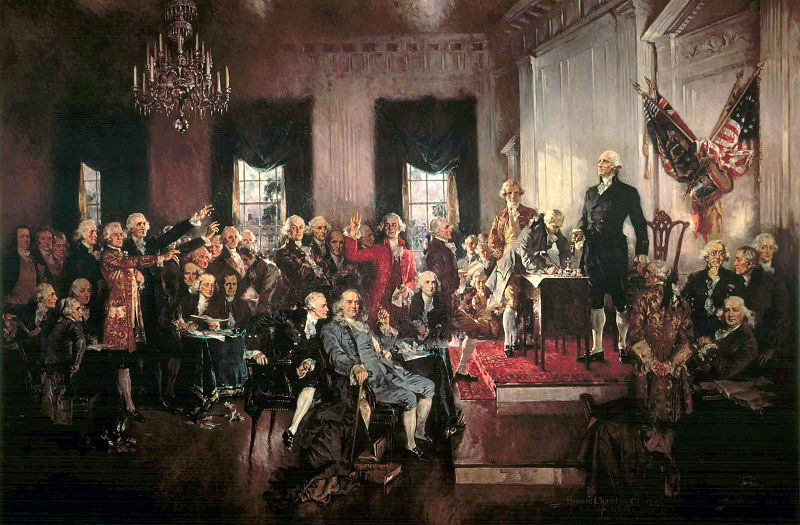
Fifty-five delegates from twelve states, Rhode Island sent nobody, spent four months in the Pennsylvania State House arguing out the operating system for a country that didn't yet know if it would survive its own founding decade. They arrived intending to patch up the Articles of Confederation. Within weeks they'd decided to scrap it and start over completely, which is either the boldest or the most reckless thing a group of people can do with an assignment, depending on how it turns out. This one turned out fine.
They worked through a brutal Philadelphia summer with the State House windows shuttered and curtains drawn, under a self-imposed vow of secrecy so strict that almost nothing leaked to the outside world for four straight months. Delegates argued over how much power the federal government should hold, how states with wildly different populations and interests would share representation, and how a nation still built on slavery would count the people it enslaved in that representation. They fought these questions out day after day in the heat, then walked to City Tavern in the evening to keep arguing over dinner.
Benjamin Franklin, 81 years old and the convention's elder statesman, lived close enough to walk to the State House but was too frail to manage it. He had himself carried there each morning by sedan chair rather than miss a session. That's dedication to a document at any age.
By September 17, they had one. Thirty-nine delegates signed it that day. It remains the oldest written national constitution still in active use anywhere in the world, drafted in this city, argued out behind these windows, by people who came in expecting to revise something small and left having built something built to last.
3. Franklin proves lightning is electricity, 1752
Every Philadelphia kid learns this one before they learn much else about the city, and for good reason. It's a genuinely great story, and the parts that hold up are just as impressive as the myth.
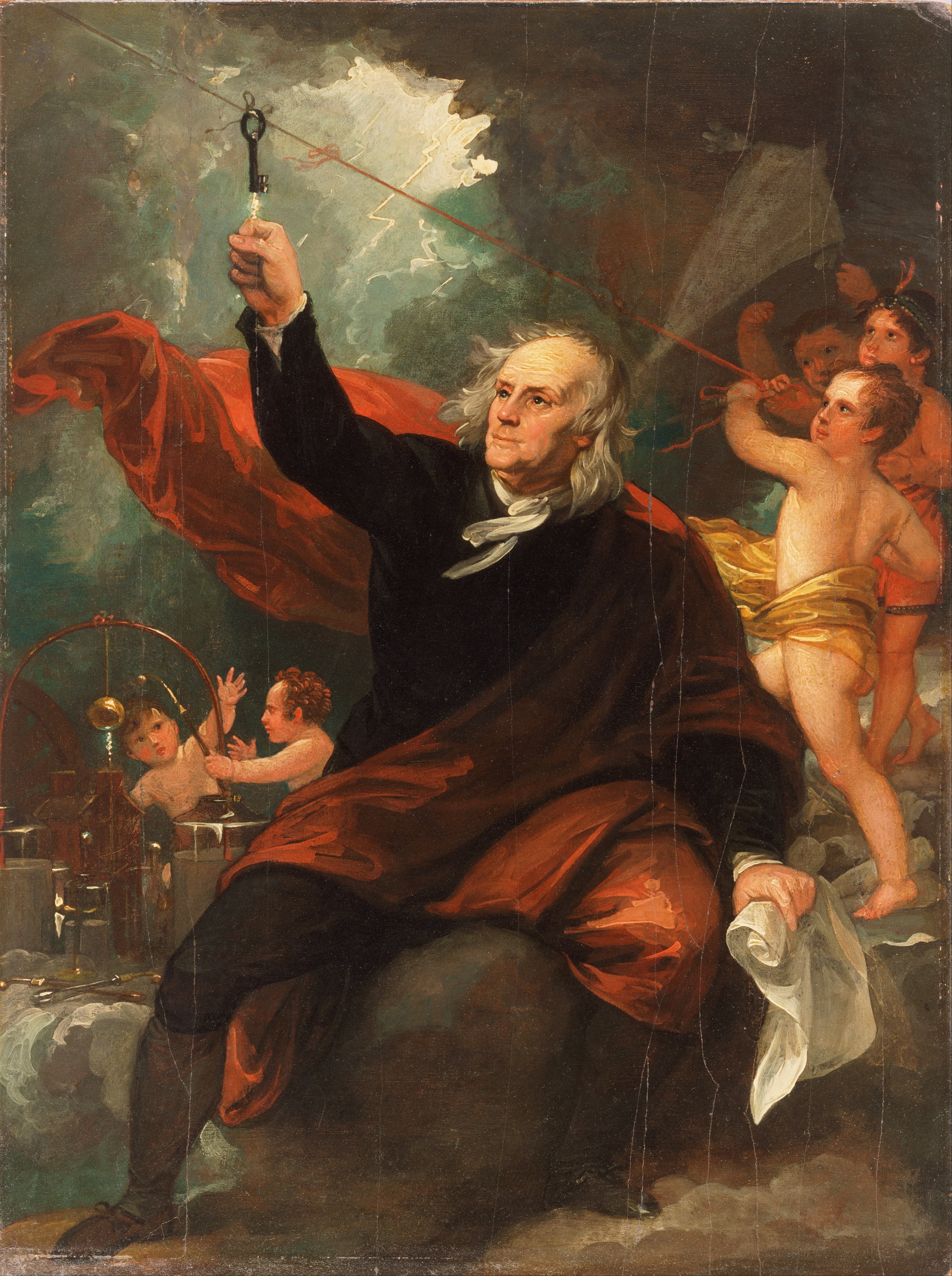
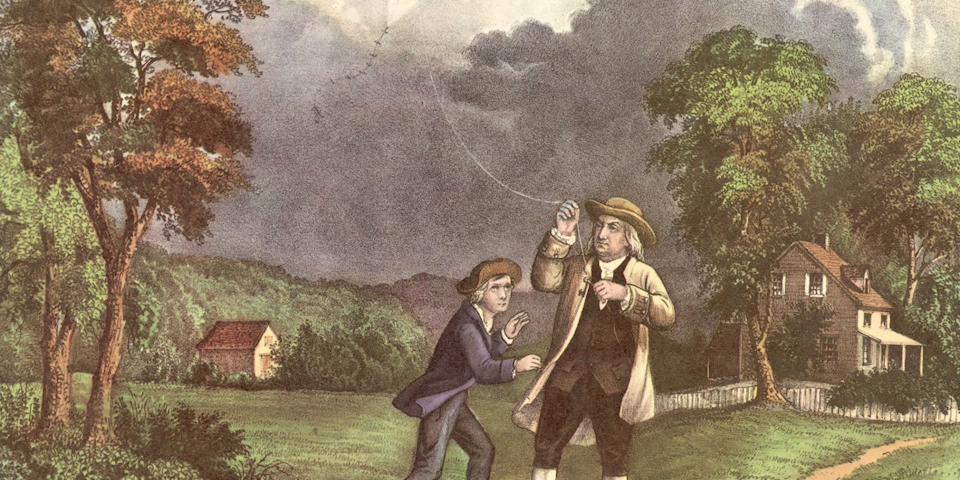
Franklin had a theory that lightning and the electric sparks he'd been studying in his lab were the same phenomenon. He'd wanted to test it from height, ideally the steeple of a Philadelphia church, but construction wasn't finished and Franklin wasn't a patient man. So he improvised: a kite, a length of hemp string, a key, and a storm rolling in over the city. Rain wet the string, the string carried a charge down to the key, and Franklin's knuckle, held close, drew a visible spark. Theory confirmed.
Historians will tell you the exact date is fuzzier than the textbooks let on, probably June 1752, possibly later that summer, since Franklin himself never nailed down the day in writing. That's a small footnote against the size of what came next. Within the year, Franklin had turned the discovery into the lightning rod, a simple pointed iron rod that could be mounted on a building and channel a strike safely into the ground instead of letting it start a fire. In an era when American cities were built almost entirely of wood, that one invention saved an untold number of buildings and lives, in Philadelphia and everywhere else it was adopted.
A kite and a key answered a question people had been asking for centuries. Not a bad afternoon's work.
4. The Centennial Exhibition, 1876
For the country's 100th birthday, Philadelphia didn't throw a party. It built a small civilization.
Two hundred and eighty five acres of Fairmount Park, more than 250 buildings, 37 nations exhibiting side by side, and something like nine to ten million visitors passing through over six months, at a time when the entire country held only 46 million people. No one has ever nailed the attendance number exactly, since plenty of visitors came back more than once, but by any count it was the most successful world's fair anyone had staged up to that point, this one held on American soil for the first time.
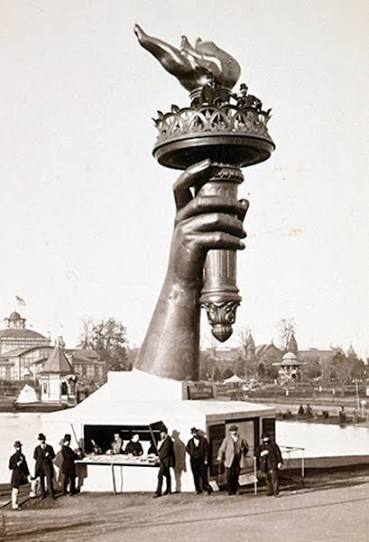
President Grant opened it in May alongside Brazil's Emperor Dom Pedro II, and visitors that summer walked through exhibit halls that would have felt like time travel in reverse: a fully assembled arm and torch of the Statue of Liberty, a decade before the rest of her arrived in New York Harbor. A working Corliss steam engine tall enough to power the entire Machinery Hall on its own, which the writer William Dean Howells described as looking like "an athlete of steel and iron with not a superfluous ounce of metal on it." And, in a quiet corner most visitors probably walked right past, a young inventor named Alexander Graham Bell demonstrating a strange little device for the very first time: the telephone.
The fair turned a modest profit, which world's fairs rarely manage, and it did something more lasting than the balance sheet. It announced to the rest of the world, less than a generation removed from the Civil War, that the United States had become an industrial power worth watching. Philadelphia hosted the moment the world adjusted its opinion of what America was capable of.
5. Common Sense hits the street, January 1776
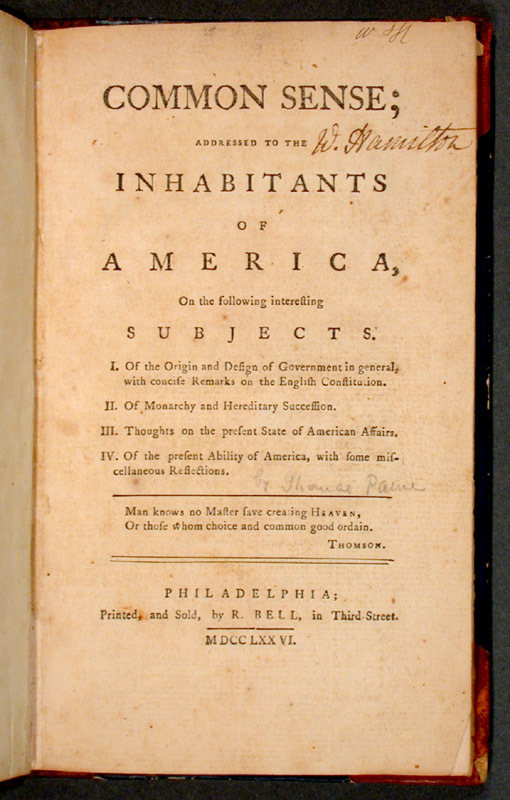
Six months before the Declaration, a different kind of revolution happened in a Philadelphia print shop, and it's the one that made the Declaration possible.
Thomas Paine had been in the colonies barely a year when the printer Robert Bell ran off the first copies of a 47 page pamphlet called Common Sense. It sold out almost immediately. Bell rushed a second printing. That sold out too. Within weeks, people who had considered themselves aggrieved Britons, loyal subjects with a grievance, were reading an argument they'd never seen in print: that the whole idea of a king ruling from across an ocean was absurd on its face, and that independence wasn't a radical demand but the only position that actually made sense.
Paine wrote it to be read aloud, short enough and plain enough that it worked in taverns and town squares for audiences who couldn't read it themselves. That was the design, not an accident. A pamphlet cheap enough for anyone to buy and simple enough for anyone to understand turned out to be more persuasive than any argument the educated elite had made in over a decade of colonial grumbling.
George Washington noticed. In a letter that April, he wrote that "common sense is working a powerful change" among people who'd never seriously entertained independence before. Six months later, the Continental Congress adopted a Declaration that borrowed heavily from the case Paine had already made to the public. He'd pledged his share of the profits to buy mittens for freezing Continental soldiers in Quebec. The publisher later claimed there weren't any profits to share, which tells you something about Philadelphia printing disputes in 1776 too, though that's a story for another day.
Paine gave the country the argument before the country had the document. Both were written a few blocks apart, in the same city, in the same extraordinary year.
Two hundred fifty years on, all five of these moments are still standing within a short walk of each other in Old City. That's not a coincidence of geography. For one hundred years, from a Revolution to a Centennial, this was the place where the country kept showing up to do its most important work. It still is.