Philadelphia: The Tale of Two Cities
In 1842, Charles Dickens and Edgar Allan Poe met in Philadelphia — two writers who understood, better than most, what it looked like when a city contained within it the seeds of its own contradiction. Nearly two centuries later, Philadelphia still does. This is the story of a city caught between the blue-collar identity it lost and the educated, cosmopolitan one it is still deciding whether to claim.

In March of 1842, Charles Dickens arrived in Philadelphia and checked into the United States Hotel on Chestnut Street. He was at the height of his early fame, on a celebrated American tour, and the city turned out to receive him. Philadelphia impressed him architecturally and repelled him aesthetically. He wrote in his American Notes that it was "a handsome city, but distractingly regular. After walking about it for an hour or two, I felt that I would have given the world for a crooked street."
While Dickens was in residence, a letter arrived from a struggling writer who lived in the city and had been one of the first American critics to champion his work. Edgar Allan Poe, then in the middle of what he would later describe as the happiest and most productive years of his life, had been a Philadelphia resident since 1838. He had written Dickens requesting a meeting, enclosing two volumes of his Tales of the Grotesque and Arabesque. Dickens replied promptly and warmly, and the two men met.
The encounter was brief and its details largely lost to history, but its outlines tell a story. Poe was earnest, barely solvent, his wife Virginia already ill with tuberculosis. Dickens was generous, agreeing to help Poe find a publisher in England. The two men shared a fascination with poverty, crime, and the dark margins of society — and they shared, in that hotel room on Chestnut Street, a city that was already becoming two different things to two different kinds of people.
Dickens would go on to write A Tale of Two Cities seventeen years later, set in London and Paris. But Philadelphia, the city that had brought these two men together, would spend the next two centuries living out its own version of that divided story. It still is.
What Went First
Philadelphia in 1950 was one of the great industrial cities of the world. The Navy Yard employed tens of thousands. The mills of Kensington and Manayunk hummed with textile work. The docks, the factories, the machine shops — all of it sustained a dense, ordered working-class culture that was overwhelmingly white, Catholic, and rooted in specific neighborhoods with specific identities. Fishtown was Fishtown. Port Richmond was Port Richmond. These were not just zip codes but communities with their own rhythms, their own parishes, their own sense of permanence.
The deindustrialization that followed was not unique to Philadelphia, but few cities absorbed it more painfully. Between 1950 and 1990, the city lost roughly 350,000 manufacturing jobs. It lost over 500,000 residents. The white population, which had stood at more than a million in 1950, began a decline that has not stopped since. By 1990, non-Hispanic whites made up just 52% of the city — a plurality rather than a majority. By 2024, that share had fallen to 33%.
This was not simply demographic change. It was the slow erasure of a particular civic identity. The blue-collar white Philadelphia that Rocky Balboa was meant to embody — stubborn, prideful, suspicious of outsiders, deeply territorial — did not disappear overnight. It retreated. To the far Northeast. To Bucks County. To Delaware County. Each decade, a little further out, until the city itself began to feel like foreign territory to the people whose grandparents had built it.
The resentment this produced is real and worth taking seriously. It is not simply racism, though racism has certainly been woven through it. It is something closer to grief — the particular grief of people who feel that a place they loved has been taken from them, even as they struggle to articulate exactly what was taken or by whom. It manifests in the famous Philadelphia chip-on-the-shoulder belligerence. It manifests in the cultural self-deprecation, the reflexive insistence that nothing good can happen here, that the city is cursed, that every promising sign will eventually betray you. There has been a slow rot — not of buildings alone, but of civic confidence.
The Brain Gain Years
Against this backdrop, what happened in the 2010s was genuinely remarkable.
Philadelphia had long hemorrhaged its college graduates. Young people from Temple and Drexel and Penn finished their degrees and left — for New York, for Washington, for wherever their ambitions led them. The city's universities were treated as feeders for other cities' economies. Campus Philly, the nonprofit dedicated to graduate retention, was founded in 2001 explicitly to address what everyone acknowledged was a crisis.
By 2010, something had shifted. The number of college-educated 25-to-34-year-olds in Philadelphia grew by 155% between 2000 and 2021, a rate that outpaced Denver, Washington D.C., and Seattle. More than half of students who attended Philadelphia-area colleges between 2010 and 2014 stayed in the city after graduating — a retention rate that beat Boston. The share of residents holding a bachelor's degree climbed from roughly 23% in 2010 to 36% by the early 2020s.
What drove this? Several forces converged at once. Philadelphia's cost of living, long a liability, became an asset as New York and Washington grew unaffordable for young professionals. The city's housing stock — dense, walkable, relatively cheap — suited the preferences of millennials who wanted urban life without the price tag. The restaurant and cultural scene, long underestimated, accelerated. Neighborhoods that had been considered borderline — Fishtown, Northern Liberties, East Passyunk — gentrified rapidly. New employers in medicine, education, and technology deepened the knowledge economy job base. The city that had once exported its graduates began to keep them.
The demographic data bears this out. Philadelphia's overall educational attainment grew faster during this period than Chicago's, New York's, and Boston's. The city that had once been synonymous with brain drain became a national case study in brain gain.
Two Cities, One Map
Here is the tension at the heart of contemporary Philadelphia: these two stories did not happen to the same people.
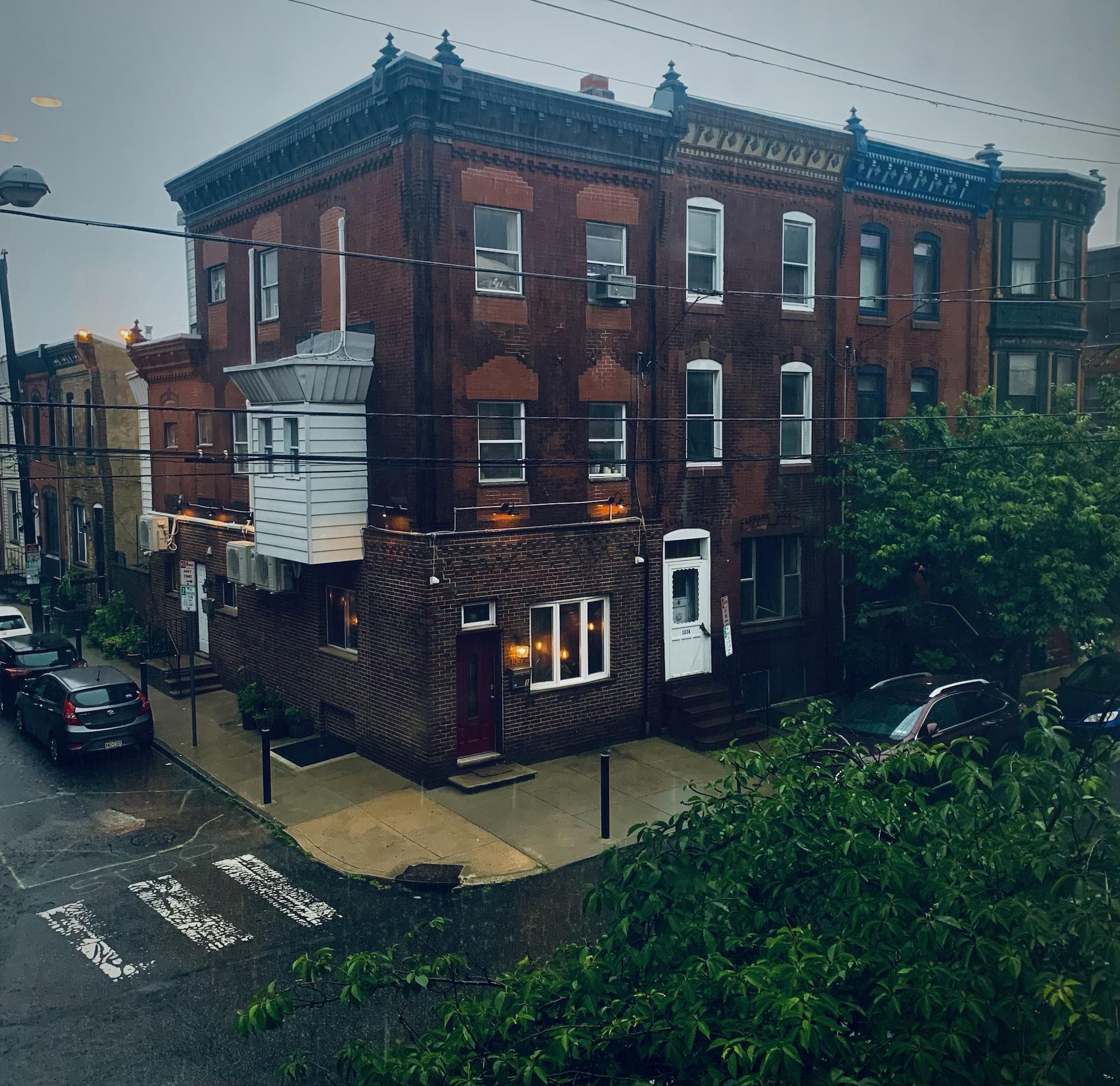
The brain gain was concentrated in specific neighborhoods and specific demographics. The young professionals who chose to stay or arrive were largely white, highly educated, and economically comfortable. They moved into precisely the neighborhoods that older working-class whites had already abandoned — and in doing so, they transformed those neighborhoods into something that felt foreign to the people who remembered them differently. The Fishtown that the new Philadelphia celebrated was not the Fishtown that old Philadelphia mourned. Same streets, different city.
Meanwhile, in the neighborhoods the newcomers did not reach — the far Northeast, parts of South Philadelphia, Mayfair, Holmesburg — the older story continued uninterrupted. Population declining. Median ages rising. Institutions closing. The brain gain was not a tide that lifted all boats. It was a spotlight illuminating one part of the city while the rest remained in shadow.
The numbers confirm the divergence. Even as overall educational attainment rose, Philadelphia's poverty rate in 2023 still stood at 20.3% — the highest among large American cities. The Hispanic poverty rate remained above 35%. More than a quarter of Black Philadelphians lived in poverty. The knowledge economy that absorbed the city's new graduates operated largely in parallel with the economy that most Philadelphians actually inhabited.
And then there is the question of what the white population decline actually means now, in 2024, compared to 1984. The decline of the 1970s and 1980s was driven by deindustrialization and racial fear — people fleeing a city they perceived as failing. The more recent decline is quieter and more complicated. Some of it is continued suburban migration from older working-class communities. Some of it is displacement — longtime residents, including lower-income white families, priced out of gentrifying neighborhoods. Some of it is simple demographic aging, as an older, whiter population dies faster than it is replaced.
What it is not, largely, is the classic white flight of the postwar decades. The college-educated whites moving into Fishtown and Point Breeze are, by and large, not leaving. They are the first wave of a different kind of white Philadelphian — one whose relationship to the city is chosen rather than inherited, cosmopolitan rather than parochial, oriented toward the future rather than the past.
The Risk Ahead
The two-city problem is not unique to Philadelphia. Every post-industrial American city that has managed a partial revival faces some version of it. But Philadelphia's version is particularly acute, for two reasons.
First, the revival is incomplete and fragile. The brain gain plateau that Pew documented in its 2026 report — educational attainment stuck at roughly 36% since the pandemic — is a warning sign. Other cities have continued climbing. Philadelphia's stall comes at the moment when it most needs momentum. The post-pandemic years brought population loss, a spike in gun violence that has since receded, and a hollowing out of Center City foot traffic that has not fully recovered. The conditions that made Philadelphia attractive to young graduates in the 2010s have not disappeared, but they are no longer unique.
Second, the civic cohesion required to address the two-city problem is itself a casualty of the divergence. The older, working-class Philadelphia and the newer, educated Philadelphia do not share much common ground — not in their politics, not in their cultural references, not in their vision of what the city should become. The self-loathing cultural resentment that has long characterized one version of Philadelphia identity is, in some ways, a reaction to feeling erased by the other version's success. That resentment does not make for good governance, good policy, or good faith.
When Dickens visited in 1842, he wished for a crooked street — some irregularity, some sign that the city had room in it for contradiction and surprise. He got his wish, eventually. Philadelphia became one of the most contradictory cities in America: impoverished and gentrifying, shrinking and growing, embittered and hopeful, all at once. Whether those contradictions can be resolved, or whether they will simply deepen, is the question the city has been failing to answer for fifty years.
Poe, who knew something about cities that contain within them their own undoing, might have recognized the shape of it.
Statistics in this article draw on U.S. Census Bureau Decennial Census data (1990, 2010), ACS 5-year estimates (2024), Pew Charitable Trusts State of the City reports (2023, 2026), and Campus Philly annual retention studies. Historical details of the Dickens-Poe meeting are drawn from the Poe Museum, the Free Library of Philadelphia, and American Notes by Charles Dickens (1842).