Philadelphia Has 20 Museums. None of Them Are About Sports, Until Now.
Philadelphia has shaped American sports for over a century. It has never had a place to prove it. That changes tonight.

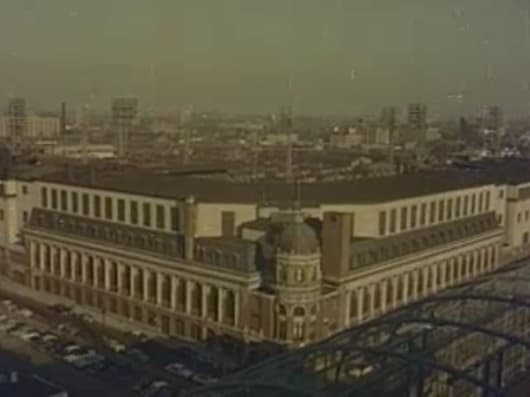
Philadelphia is a sports city the way water is wet. It's not a trait so much as a condition. The city has five professional franchises (the World cup is going on so cut the Union some slack), a fan base that has been called uniquely, sometimes aggressively passionate in nearly every national publication that's bothered to look, and a sports history that stretches back to the earliest days of American professional athletics. Baseball, basketball, football, hockey. In each case, Philadelphia wasn't just a participant. It was a laboratory. The game was shaped here.
And yet the city has never had a museum to show for it.
For more than a decade, a group of Philadelphians has been trying to fix that. The effort has survived two funerals, a pandemic, a revolving door of proposed locations, and a fundraising gap that has tested everyone involved. Tonight, the Museum of Sports holds its first public event: an opening reception from 5 to 7pm at City Hall, where two mosaic portraits from a new exhibit called "Founders of Philadelphia Sports" will be unveiled. Five more portraits follow through the summer and into the fall. A pop-up museum location is in the works. The permanent home is years away.
It is, at minimum, a start.
The idea and the men behind it
Lou Scheinfeld has been in Philadelphia sports longer than most franchises. As the Flyers' founding Vice President in 1966, he was in the room when the team got its name. He created the Kate Smith pregame ritual that became one of the most storied traditions in hockey. He ran the Spectrum, later served as President of the 76ers, and spent 53 years as a close associate of Ed Snider, the chairman of Comcast Spectacor and the man who built the Flyers into what they became.
When Scheinfeld first proposed the Museum of Sports around 2014, it had two of the most powerful backers it could have hoped for. Snider was in. So was Lewis Katz, the Camden-born businessman who had owned the New Jersey Nets and Devils, co-owned the Inquirer, and spent much of his later life as one of the region's most generous civic philanthropists. Katz was clear about why he cared. He once stood up in a planning meeting and said he personally would make it happen, because the city needed something to remind kids who Paul Arizin and Bobby Clarke were.
Then came two blows the project never fully recovered from.
On May 31, 2014, Lewis Katz boarded a private jet at Hanscom Field outside Boston. The plane failed to get airborne during takeoff and crashed through the airport perimeter fence, killing all seven people on board. Katz was 72. He had purchased the parent company of the Philadelphia Inquirer just days before. Ed Snider, who had been battling bladder cancer, died on April 11, 2016. He was 83.
"The thing is we have all the goods, all the collectibles," Scheinfeld said in the years that followed. "The thing that makes it so expensive is high tech." He has said repeatedly that the museum would have been built already if his two biggest benefactors had lived.
A decade of detours
The Museum of Sports is organized as a 501(c)(3) non-profit, and the heart of it is the memorabilia collection of Dr. Nicholas DePace, a cardiologist whose holdings are, by any reasonable measure, staggering. The collection includes a Babe Ruth shirt described as one of the rarest in existence, a Ty Cobb jersey from his time with the Philadelphia Athletics valued at $3 million, and pieces spanning nearly every major American sport. It has been sitting in a preview location in South Jersey, waiting for a permanent home.
Finding that home has been the problem.
The original plan centered on the Jetro Building on Pattison Avenue, a warehouse directly behind Lincoln Financial Field that seemed almost purpose-built for the concept. Twenty-five thousand square feet. Game day foot traffic from the sports complex. The Eagles, Phillies, Flyers, and 76ers all within walking distance. Zoning approval came in 2018. The financing never did.
Plans were revived in 2024 with an eye on the Sports Complex itself, tied to Comcast Spectacor's proposed $2.5 billion redevelopment that would connect all four venues with retail, hotels, residences, and a new Sixers arena. High-level conversations with Comcast Spectacor CEO Dan Hilferty were ongoing as recently as early 2025. But that project is years from completion, and the museum needed a nearer-term answer.
By January 2026, the org had pivoted to an interim location: 12,000 square feet on the ground floor of the Lits Building at 7th and Market, a historic cast-iron commercial block a short walk from Independence Hall. Lease negotiations were underway and the city and state had both been contacted about potential incentives. That pop-up space has not yet opened, but the museum expects to launch it in the coming months, positioned to draw from the flood of visitors arriving for the World Cup and All-Star Game.
Tonight's City Hall event is the first public step.
What the museum is trying to be
Brett Mandel, the museum's executive director, is quick to say the vision is not a trophy case.
"Philadelphia historically shaped the world of sports," Mandel said in a recent interview. "It's where American sports came to matter. Not just how to play, but how sports became mass entertainment and big business and civic identity."
The planned permanent facility would feature experiential exhibits: virtual reconstructions of demolished stadiums like Connie Mack Field, immersive re-enactments of famous plays, and VR experiences that put visitors inside the moments. It would house a digital streaming studio, a theater, a collectibles shop, and a rooftop mini-golf course that tours historic Philadelphia venues. The goal, in Scheinfeld's own words, is something between Dave & Buster's and Cooperstown. A place that's genuinely fun and genuinely educational, where the city's deep and sometimes forgotten sports history can be encountered rather than just read about.
The founders
The exhibit debuting tonight at City Hall is a preview of that ambition. Presented in partnership with Creative Philadelphia, "Founders of Philadelphia Sports" features mosaic-tactile portraits by Philadelphia artist Jonathan Mandell, whose work is on permanent display at the National Constitution Center, the National Liberty Museum, and Citizens Bank Park. Two portraits unveil tonight; the remaining five will be revealed in stages through October 30th in display cases on the first floor of City Hall's southeast corner.
The seven founders are a remarkable cross-section of Philadelphia sports history, and several of them are not household names.
Bert Bell co-founded the Philadelphia Eagles in 1933 and went on to serve as NFL commissioner, where he introduced the college draft, overtime, and the television policies that turned professional football into America's dominant sport. Eddie Gottlieb, known as "the Mogul," chaired the NBA's rules committee for 25 years and was the driving force behind innovations including the 24-second shot clock. He built the Philadelphia Warriors and drafted Wilt Chamberlain. Connie Mack managed and owned the Philadelphia Athletics for 50 years, winning five World Series titles and shaping the early business of professional baseball.
Effa Manley was born in Philadelphia and became the only woman ever inducted into the Baseball Hall of Fame. As co-owner of the Newark Eagles of the Negro National League, she was a relentless advocate for her players and for civil rights, using the team as a platform for boycotts and anti-lynching campaigns decades before integration. Ed Bolden built the Hilldale Daisies into one of the great Negro League franchises and later founded the Philadelphia Stars, a significant and underrecognized chapter in the city's baseball history.
Billie Jean King, who served as player-coach of the Philadelphia Freedoms of World Team Tennis, co-founded the Women's Tennis Association and fought for equal prize money at the US Open, changing the economics of women's sports permanently. And Ed Snider, the founder of the Flyers and Comcast Spectacor, who in 2005 created the Ed Snider Youth Hockey Foundation with a simple idea: use hockey as the hook to get underserved Philadelphia kids into an after-school program that combined skating with education and life skills, all at no cost to families. The foundation rescued five city-owned rinks that were slated for closure, refurbished them, and built a program that today serves more than 3,000 boys and girls across Philadelphia and Camden. Students who complete the program receive a free four-year college tuition. Snider endowed the foundation before he died so that every dollar donated is matched two-to-one. It is, in its own way, as consequential as anything the Flyers ever did.
They shaped the rules of their games, the business of their leagues, and the culture of this city. As Mandell put it, these are people who have largely been forgotten. Tonight is a small attempt to change that.
Why 2026 matters
Philadelphia has spent this year in an unusual spotlight. The city is hosting World Cup matches at Lincoln Financial Field. The MLB All-Star Game is coming. The nation is celebrating 250 years of existence, and Philadelphia is at the center of it.
There is no better moment for a sports museum to announce itself.
Scheinfeld has been deliberate about this timing. The City Hall exhibit, the forthcoming Lits Building pop-up, the "Museum of SportsMobile" planned for the FIFA Fan Experience at Lemon Hill. All of it is designed to build visibility in a year when millions of visitors are arriving in a city that has never had a place to tell them its sports story.
The permanent home is still years away. Tonight is a reception in a display case corridor at City Hall, not a ribbon-cutting at a $50 million facility. The museum is still raising money, still negotiating leases, still searching for the major backer that has eluded it since Snider and Katz died.
But it is no longer theoretical. There are mosaics going up in City Hall tonight. There are curators and an executive director and a decade's worth of accumulated momentum finally pushing through a door that has been almost-open for years.
Katz once said the city needed this so kids would know who Paul Arizin and Bobby Clarke were. He didn't live to see it. Neither did Snider. But the idea they helped launch is, as of tonight, real.
Philadelphia has 20 museums. Now one of them is finally about the thing this city cares about most.
The opening reception for "Founders of Philadelphia Sports" is tonight, June 25th, from 5 to 7pm. City Hall, first floor southeast corner near the East Market Street Archway. Free and open to the public.