Is Philly a Worse City Than Phoenix? A Leading Report Says So.
The report puts Philly between Phoenix and Tampa

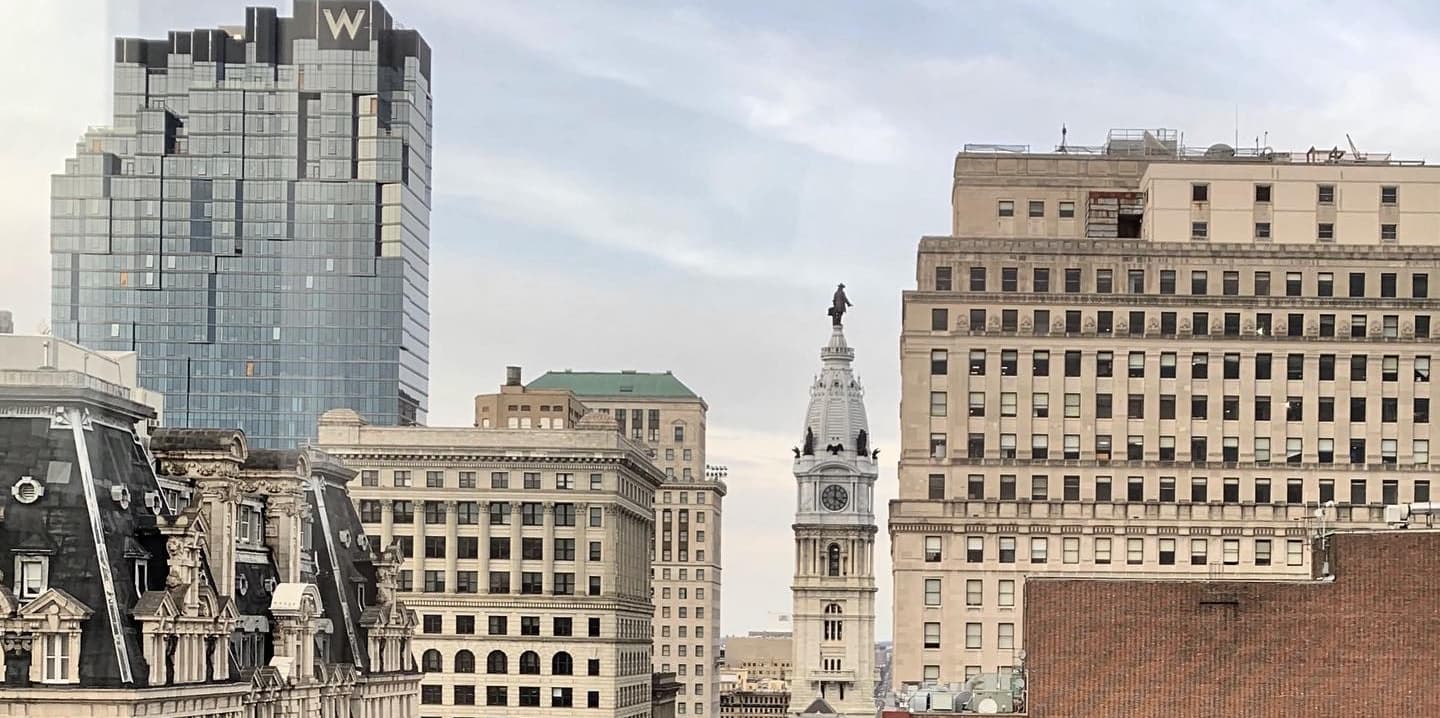
Resonance Consultancy released its 2026 America's Best Cities report last month, and buried in a spreadsheet of 393 metro areas is a ranking that will annoy roughly 1.6 million people. Philadelphia landed at #20. Phoenix landed at #19. One spot separates the birthplace of the country from a desert metro that didn't exist as a major city until the invention of air conditioning.
Before anyone fires off an angry email to a consulting firm in Vancouver, it's worth asking what this ranking is actually measuring, because the answer is more interesting than the rank itself.
What the Report Actually Measures
Resonance built its ranking around three pillars: Livability, Lovability, and Prosperity. Each pillar gets scored twice, once for how a city actually performs on roughly 50 hard indicators (walkability, transit, air quality, GDP per capita, university rankings, and so on) and once for how the American public perceives the city, based on an Ipsos survey of more than 2,000 households who were asked, in open-ended fashion, where they'd want to live, visit, and find work.
The final score blends performance and perception in equal measure. That detail matters more than anything else in this story.
Philadelphia's pillar ranks: Livability #23, Lovability #21, Prosperity #20. Phoenix comes in at Livability #19, Lovability #20, Prosperity #18. The gap is thin across the board, and Phoenix wins two of three pillars by a handful of spots, not by a landslide.
Where the Real Story Is
Buried in the report's own analysis section is a chart plotting every city's performance rank against its perception rank. Resonance flags 43 cities that are, in their words, "doing better than their reputations suggest." Philadelphia is on that list, alongside Minneapolis, St. Louis, Indianapolis, Louisville, Milwaukee, Madison, and Buffalo. The report's own language on this point is direct: "A city like Philadelphia may have a genuinely strong food and arts culture that residents and visitors alike recognize, but building national awareness of that strength takes time... The gap is in the story, not the city."
That's Resonance grading its own ranking, essentially conceding that Philadelphia's underlying numbers are stronger than the score it produced. Worth sitting with that for a second. The firm that ranked Philadelphia below Phoenix is also the firm telling you Philadelphia's reputation, not its reality, is what's dragging it down.
The mechanism behind that gap is specific to one pillar. Across the full 393-city dataset, Resonance found only a 0.49 correlation between how livable a city actually is and how livable Americans perceive it to be, the weakest relationship of the three pillars by a wide margin. Lovability, by contrast, tracks much more tightly with perception (0.92 correlation), because visitor experience travels fast through word of mouth and social media. Livability, especially the unglamorous parts like transit infrastructure and public health metrics, apparently takes years to register with people who've never lived there.
Philadelphia is close to a textbook case of that lag.
The Numbers Resonance Doesn't Publish
Resonance's methodology draws on Walk Score, Transit Score, life expectancy data, GDP per capita, and about 40 other public indicators, but the report itself doesn't disclose the raw scores behind each city's pillar rank. So it's worth checking a few of those inputs directly.
On walkability, Philadelphia isn't just solid. It's elite. The city posts a Walk Score of roughly 75 and a Transit Score around 67, putting it fourth or fifth nationally behind only San Francisco, New York, and Chicago. USA Today's 10Best readers just named Philadelphia the most walkable city in America for the fourth consecutive year. That's an indicator sitting directly inside Resonance's Livability pillar, and it's hard to reconcile a top-five walkability performance with a #23 overall Livability rank unless something other than the hard data is pulling the number down.
Other parts of the prosperity picture are less flattering, and less about perception. Philadelphia's metro economy generated $557.6 billion in GDP in 2023, the 11th-largest in the country in absolute terms. But Resonance's Economic Output indicator is measured per capita, and with a metro population north of 6.2 million, that works out to roughly $89,000 per resident, well behind San Francisco, Seattle, and Boston, all of which clear six figures per capita. Philadelphia also carries just five Fortune 500 headquarters within city limits, a thin bench compared to Atlanta or Dallas. Those aren't perception problems. Those are numbers Philadelphia would need to actually change to move up.
So the honest answer sits in the middle. Part of Philadelphia's ranking is a genuine story lag, the kind Resonance's own data says takes years to close. And part of it is a real structural gap in per-capita economic output and corporate density that no amount of storytelling fixes.
What Would Actually Move the Needle
Resonance's broader research points to a specific lever here, and it isn't a new ad campaign. The correlation between how much Americans want to visit a city and how much they want to live there hit 0.97 in this year's data, the highest the firm has ever recorded. Translation: the fastest way to change how people think about living somewhere is to change how they think about visiting it.
Philadelphia has more raw material for that than its rank suggests. A Michelin Guide debut. James Beard Award wins for Kalaya and Royal Sushi & Izakaya. A run of national press ahead of the city's 250th anniversary summer, with six FIFA World Cup matches and the MLB All-Star Game both landing in 2026. None of that has fully worked its way into the national perception survey yet, and Resonance's own three-year tracking data backs that up: Philadelphia isn't among the 11 cities that have improved their national perception across all three pillars simultaneously over the past three years. Kansas City, Cleveland, and Richmond made that list. Philadelphia didn't.
So is Philly worse than Phoenix? By one spot, on one proprietary index, built on a methodology that explicitly tells you it's measuring reputation as much as reality. Take it for what it's worth. The more useful number in this report isn't #20. It's the one Resonance printed about its own findings: Philadelphia is one of 43 cities doing better than the country currently gives it credit for.