Imagining A Different World: What If Philadelphia Had Gotten the UN
UN delegates from the United Kingdom, Poland, the Soviet Union, India, and New Zealand were prepared to vote for a headquarters on Belmont Plateau in Fairmount Park

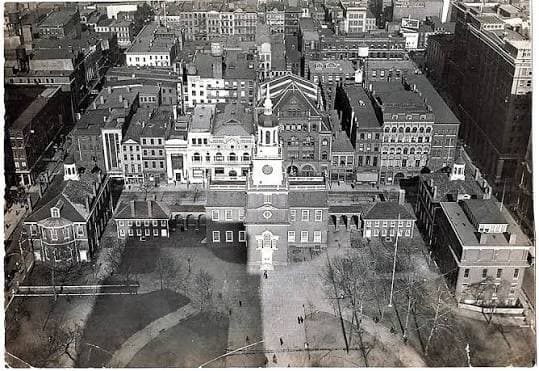
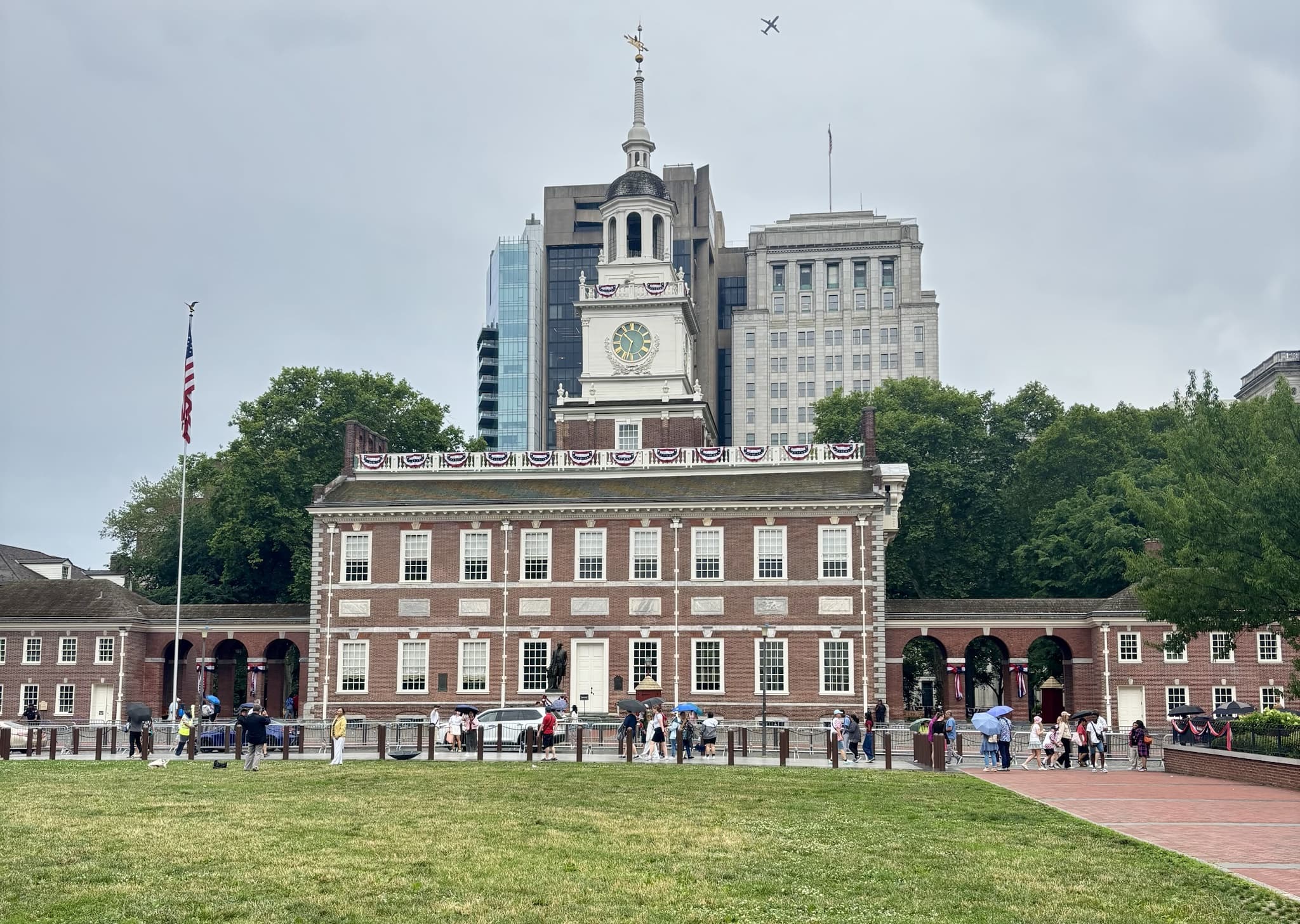
For about eighteen months, from the spring of 1945 to the winter of 1946, Philadelphia was the front-runner to become the permanent seat of world government. Not a long shot. Not a consolation prize. The front-runner. UN delegates from the United Kingdom, Poland, the Soviet Union, India, and New Zealand were prepared to vote for a headquarters on Belmont Plateau in Fairmount Park, or along a mall stretching from Independence Hall to Penn's Landing. Pennsylvania's General Assembly passed a unanimous resolution backing the bid. The mayor of New York was warned that unless his city produced something better, the honor was going to Philadelphia.
Then, in December 1946, John D. Rockefeller Jr. offered $8.5 million to buy an 18-acre tract of Manhattan slaughterhouses along the East River and give it to the UN outright. The committee voted 33 to 7 for New York within days. Philadelphia's campaign, which had been building for a year and a half, collapsed in the space of a week.
This wasn't Philadelphia dreaming big and losing to an obvious favorite. Philadelphia was, by most contemporary accounts, winning. So: what would it have actually meant, for the city and for the country, if a different rich man had moved a little faster? And what precedent did it set for the future that one uber-wealthy individual could buy the country’s connection to the rest of the world?
The physical city
The leading proposal put the headquarters on Belmont Plateau, a broad hilltop in the middle of Fairmount Park with sightlines down toward the Schuylkill. A competing plan imagined a diplomatic corridor running from Independence Hall to the river, an axis of government old and new. Either version would have meant a permanent international compound inside what is now one of the largest urban park systems in the country, or a wholesale redevelopment of the Center City waterfront decades before anyone else was thinking about it that way.
Fairmount Park as we know it, the joggers and the boathouses and Belmont Plateau's open lawn, likely doesn't exist in its current form under this scenario. Neither does the sequence of preservation fights that shaped Independence National Historical Park in the 1950s, since that whole push was partly a consolation project, Philadelphia's civic energy redirected toward beautifying the Independence Hall area once the UN bid was lost. Some of what the city built to console itself might never have been built at all, replaced instead by chancelleries, delegate housing, and the security apparatus that comes with hosting a permanent international body.
The economic city
New York's status as a global financial and diplomatic capital didn't originate with the UN. Wall Street, the major banks, and advertising were already centered there. The UN added prestige and a permanent population of diplomats, translators, and international staff on top of a city that was already the country's financial core. That matters for the counterfactual, because it cuts against the tempting version of this story where Philadelphia "loses" New York's entire twentieth century.
In any case, New York almost certainly remains the country's financial capital either way. What changes is which city becomes the diplomatic one. Philadelphia hosting the UN plausibly means Philadelphia becomes the natural home for the permanent missions, the international schools, the consular offices, the layer of global civil society that clusters around a UN headquarters wherever it lands. It's the difference between Geneva and Zurich, not the difference between New York and Scranton.
Whether it would have meaningfully closed the gap between Philadelphia's growth trajectory and New York's over the following eighty years is difficult to determine. Philadelphia's manufacturing decline in the postwar decades had causes that ran through federal housing and highway policy, deindustrialization, and regional competition with the Sun Belt, forces that had comparatively little to do with where the UN's flagpoles ended up. However, the city’s lack of immigration growth in the post-war era likely would have been greatly bolstered by the presence of the United Nations, stemming the loses felt in neighborhoods close to Center City.
The national and global city
It's tempting to read the UN's arrival in New York as some sort of inflection point for American wealth concentration, the moment a Rockefeller bought his way into shaping the postwar order. While Rockefeller's donation was legally clean: he spent his own money, transferred clear title, and the land became sovereign UN territory that his family has never owned or profited from directly. His son Nelson and Robert Moses had been maneuvering behind the scenes to keep the headquarters near New York, including an earlier, unsuccessful attempt to offer the family's own Westchester estate, and the deal enriched Manhattan real estate broadly in ways that were certainly convenient for a family with major holdings there. That's elite influence operating through a respectable, diffuse channel. It is a different animal from the more direct, transactional self-dealing that shows up elsewhere in American business and political history, and the distinction is worth preserving rather than collapsing into a single story about greed. However, it would be wrong to not to point out the self-serving nature of Rockefeller’s actions.
What the Philadelphia bid represented is a fork in the road for how postwar American civic identity got assigned. New York became the site where global power and American commercial dominance visibly fused. A Philadelphia headquarters would have forced a different fusion: the UN's internationalism draped over the imagery of the American founding, delegates debating collective security within sight of the halls of our Founding Fathers. Whether that combination would have tempered anything about how the UN, or the country, actually behaved over the following eight decades is speculative, but tempting to believe that the “rich get richer, the poor get poorer” mentality may have been more subdued.
The Diplomatic Center
The most plausible scenario would have been that Philadelphia would have a larger diplomatic community and international institutional presence than it does now. Fairmount Park, or the Independence Hall corridor, would look nothing like it does today. Some of the mid-century civic energy the city poured into preservation and park-building after losing the bid might have gone toward something else entirely, or might never have been summoned at all. While New York would still very likely be the country's financial capital, UN or no UN, it is likely that the corporate consolidation that consumed most of Philadelphia’s institutions may have been less severe. A much larger skyline might be in place. Neighborhoods that fell into disrepair may not have fallen so far.
While no one can tell really what difference it would have made to the city and country, it is clear that that Philadelphia came far closer to becoming the seat of the postwar world order than its current reputation as a legacy city, and that the deciding factor was less about the substance of either city's case and more about which family managed to move a checkbook first.
Related articles