10 Things to Do in Old City Philadelphia to Mark America's 250th
The nation was born right here. Here's how to actually feel it.

Old City is a small neighborhood. You can walk it end to end in about fifteen minutes. But there is no denser concentration of American history anywhere on earth. This is where the Declaration was signed, where the Constitution was drafted, where Benjamin Franklin lived and worked, and where the new republic took its first stumbling steps toward becoming a country.
In 2026 for the 250th anniversary of independence, Old City has more going on than it has since the Bicentennial. New museums have opened. Historic buildings closed for decades are welcoming visitors again. Here are ten things worth your time.
1. Stand inside Independence Hall
The obvious one, and obvious for good reason. The room where the Declaration of Independence was signed and where the Constitution was drafted looks better right now than it has in years. Independence Hall went through an extensive preservation project through 2025 and into early 2026 covering accessible ramp construction, restoration of wood elements, masonry, plaster, and metal finishes, and historically accurate repainting of the ceilings, walls, and trim. Timed entry tickets are free through the National Park Service. Book them in advance because this summer the lines will be long.
Chestnut Street between 5th and 6th | nps.gov/inde
2. See The Declaration's Journey at the Museum of the American Revolution
The Museum of the American Revolution's centerpiece exhibition for 2026 is the best thing in Old City right now. The Declaration's Journey traces the history and global influence of the Declaration of Independence through more than 120 artifacts including Thomas Jefferson's chair, a Marquis de Lafayette-annotated draft of the French Declaration of Rights, the prison bench where Martin Luther King Jr. wrote "Letter from a Birmingham Jail," and a spinning wheel belonging to Gandhi.
It reframes the Declaration not as a purely American document but as something the whole world has wrestled with for 250 years. It runs through January 2027 so you have time, but this summer it will be at peak energy.
101 S. 3rd Street | amrevmuseum.org
3. Visit the First Bank of the United States
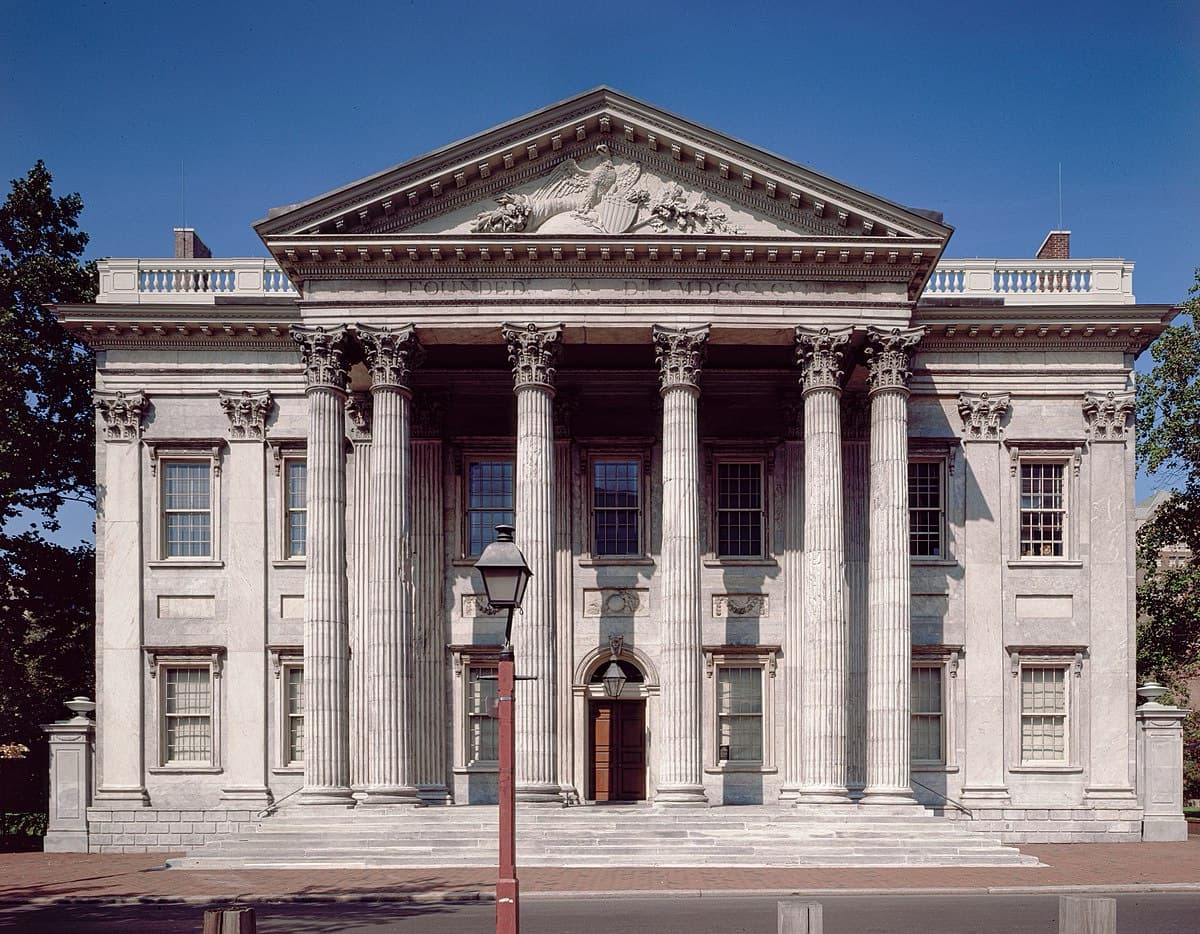
Possibly the most underrated thing on this list. The First Bank of the United States has been closed since the Bicentennial in 1976 and reopens to the public on July 1, 2026 following a multi-million dollar renovation. The building is one of the most beautiful in Old City and served as the cornerstone of Alexander Hamilton's plan to financially unify the original 13 colonies. Nobody has been inside in 50 years. That alone is worth the trip.
3rd and Chestnut Streets | nps.gov/inde
4. See the Liberty Bell
Visiting the Liberty Bell Center is free, though be prepared for a line and a quick security screening. Before you reach the Bell itself you pass through an exhibit space covering its connection to independence, abolition, and equality throughout its full history as an icon. The Bell was rung when the Declaration of Independence was first publicly read on July 8, 1776. In 2026 standing next to it carries a different kind of weight than it usually does. Go early in the morning before the crowds build.
526 Market Street | Daily 9am to 5pm, free | nps.gov/inde
5. Tour the US Mint
The first US Mint was established here in Philadelphia in 1792, the first building ever authorized by the federal government. On the self-guided tour you can view coining operations from 40 feet above the factory floor, see the original coining press used to strike the nation's first coins in 1792, and take in seven Tiffany glass mosaics created for the building's opening in 1901. The tour is free and takes about 45 minutes. No reservations needed. Summer hours run Monday through Saturday, 9am to 4:30pm.
One note: the Mint suspended tours in March 2026 for entrance renovations, with reopening expected by end of April. It should be open now but worth confirming at usmint.gov before you go.
151 N. Independence Mall East | usmint.gov
6. Explore two new galleries at the National Constitution Center
The National Constitution Center has opened two new permanent galleries for the semiquincentennial. The first, America's Founding, showcases rare artifacts including an original copy of the US Constitution. The second, Governing the Nation, opened in May 2026 and takes visitors through the checks and balances of the three branches of government with hands-on experiences.
If you last visited a few years ago these additions make it worth coming back. And on Wawa Hoagie Day during the Welcome America festival, admission is free all day.
525 Arch Street | constitutioncenter.org
7. Walk Elfreth's Alley
The oldest continuously inhabited residential street in the United States. People have lived on this block since 1702. It's two blocks long and easy to miss, tucked between Arch and Race Streets near Front. In a neighborhood full of firsts this one hits differently because it is not a monument or a museum, just a cobblestone street where ordinary Philadelphians have always lived. Walk it slowly. In 2026 that is enough.
Between Front and 2nd Streets off Arch
8. The Red, White and Blue To-Do on July 2
On July 2, the date John Adams actually thought would become Independence Day, the Philadelphia Historic District hosts a full-day celebration called the Red, White and Blue To-Do. The day begins with bell ringings, museum and historic site openings, and a flag-raising ceremony with Betsy Ross, followed by a parade through America's most historic square mile.
This is the event that feels most authentic to what Old City actually is. Crowds will be manageable compared to July 4 and the scale is human. If you are choosing one day to be in Old City this summer, July 2 is probably the answer.
Various Old City locations | visitphilly.com
9. Visit the Betsy Ross House and see her sewing table
The Betsy Ross House at 239 Arch Street is one of Old City's most visited stops, an immersive look inside the home and workshop of the upholsterer believed to have sewn the first American flag. This year it has something new that no amount of planning could have anticipated.
For more than five years, the house's director Lisa Acker Moulder had heard tell of a modest wooden table with six rectangular drawers and four curly feet. It was said to be Ross's original sewing table, possibly the very surface on which she stitched the first Stars and Stripes. On June 14, Flag Day, one of Ross's living descendants Eric Conrad donated it to the museum. Conrad inherited the table from his mother and says it came into his family in the 1860s when Ross's granddaughter married into their family. He cycled to Philadelphia from Maryland to make the donation as part of a 3,600-mile bike tour of all 13 original colonies.
The table is currently missing one drawer, which historians believe Betsy herself removed to use as a portable sewing basket. The house is working with woodworkers to recreate the missing piece. Go see it while the story is still fresh.
239 Arch Street | Free with recommended donation | historicphiladelphia.org
10. Have a beer at A Man Full of Trouble
City Tavern has been closed since 2020. But a few blocks south in Society Hill there is something better. A Man Full of Trouble is Philadelphia's only surviving Revolutionary-era drinking spot, a waterfront watering hole that sat shuttered to the public for decades before reopening in late 2024. When it first opened in 1759 this was not where Benjamin Franklin was having his beer. This was the dock workers' bar, the bar for people who did not wear ruffled shirts. It fits 25 people on the ground floor. Upstairs is a small museum of the neighborhood's Revolutionary past and a gallery space for local artists.
Open Monday and Wednesday through Sunday. Check hours before you go.
127 Spruce Street | successionfermentory.com